

Naloxone in workplaces and opioid risk. What Ontario businesses should know.

As of June 2023, workplaces in Ontario must make a naloxone kit available where there is a risk of a worker experiencing an opioid overdose at the workplace, such as from fentanyl and carfentanil. This article describes the risk factors workplaces should consider, and measures and procedures that are needed to ensure compliance with the law and effectiveness of naloxone if a workplace chooses to make it available.
Understanding naloxone
Naloxone, a life-saving intervention, is designed to reverse opioid overdoses temporarily. Typically, a naloxone kit in Ontario comprises two doses of nasal spray, essential for promptly addressing overdose situations.
DOWNLOAD NOW
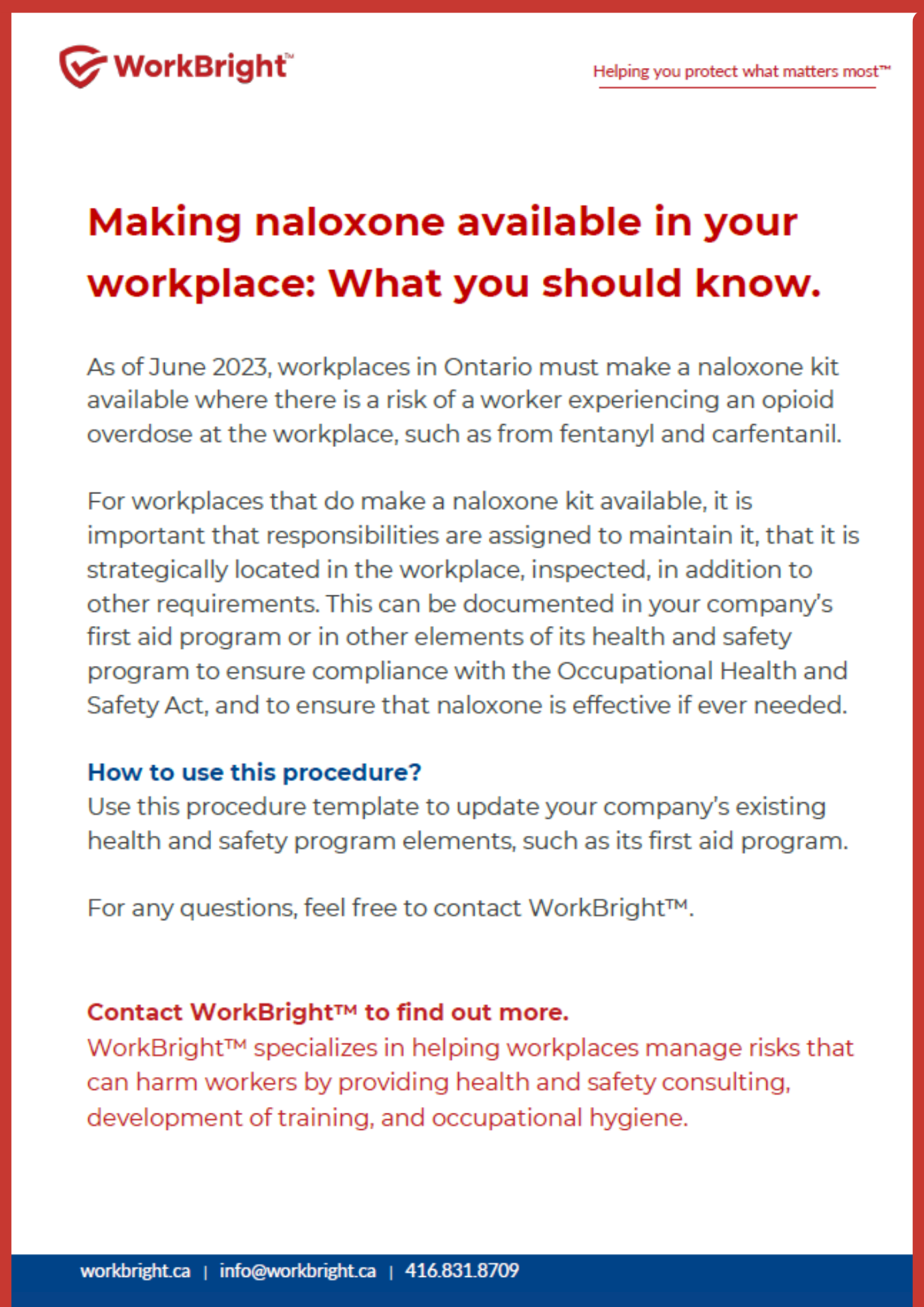
Make a proactive step in ensuring the safety of your workplace and colleagues. Download your ‘Making Naloxone Available in Your Workplace: What You Should Know’ procedure resource now! Together, we can make a difference and save lives.
Naloxone is required if a risk factor is present that could increase the chance of an opioid overdose happening to one of your workers at your workplace.
Some of the factors that could indicate an increased risk include:
- a worker discloses they are at risk,
- a worker has overdosed from opioids in the past while at work,
- you observe or discover opioid use among workers,
- you find paraphernalia in the workplace, or
- your Joint Health and Safety Committee, Health and Safety Representative, union, human resources staff, or anyone else at work brings the risk to your attention.
If you have naloxone in your workplace the Occupational Health & Safety Act requires employers to ensure the following is met.
It is highly recommended that your workplace update its health and safety program to document how it will ensure the following requirements will be met.
- How it will make at least one naloxone kit available in each workplace
- Who will be assigned to oversee naloxone on every shift
- The type of training provided to the person in charge so they understand how to recognize the signs of overdose and how to administer naloxone
- Ensuring the names of the persons in charge of naloxone are posted in the workplace
- How naloxone will be inspected and maintained
- How your workplace will keep information confidential. For example, if a worker were to disclose they suffer from an opioid use disorder or have been prescribed it.
A Workplace Naloxone Kit must include the following:
- A hard case
- Two doses of naloxone
- A one-way rescue breathing barrier, and
- Gloves.
Those who administer naloxone are protected from liability
The Good Samaritan Act, 2001 protects those who administer naloxone in good faith from liability that could arise from providing it.
Disclosing personal information
Employers must be cautious when disclosing information about risks of opioid overdose in the workplace and should not reveal more information than is necessary.
There are many more factors to be considered in order to ensure your workplace complies with the requirements of the Act and regulation if it chooses to make naloxone available.
More references
- Ontario government’s webpage Naloxone in the Workplace.
- Occupational Health and Safety Act (see section 25.2)
- Regulation 559 – Naloxone Kits

WorkBright’s Mike Russo joined Charmaine Hammond and Candace Plattor to discuss the impact addictions have on workplace health and safety.
WorkBright™ specializes in helping workplaces assess risks that lead to injuries and illnesses, and can help you navigate the complex world of health and safety legislation. Contact us to find out more.