

Occupational Exposure Limits in Ontario: What Employers Need to Do

Many Ontario employers assume occupational exposure limits (OELs) only apply when hazardous chemicals are obvious. That assumption leads to missed risks and weak due diligence.
OELs apply anywhere workers are exposed to dusts, fumes, vapours, gases, fibres, mists, or hazardous noise. This includes routine tasks like welding, sanding, cleaning with solvents, or operating loud equipment.
What Ontario Employers Need to Do
Ontario employers are expected to identify exposure hazards, compare worker exposure to applicable occupational exposure limits, and implement controls to reduce exposure. This includes engineering controls, work practices, and personal protective equipment where required.
To demonstrate due diligence in practice, employers are typically expected to assess occupational hygiene risks, verify that controls are effective, and act before exposure limits are exceeded.
Under Regulation 833, employers must take all measures reasonably necessary to protect workers from hazardous biological and chemical agents. O. Reg. 381 sets a noise exposure limit of 85 dBA Lex,8.
Speak with an Occupational Hygienist

Why OEL compliance is often misunderstood
An occupational exposure limit is a measurable benchmark used to determine whether airborne or noise exposure is adequately controlled.
Many employers rely on WHMIS, Safety Data Sheets, or PPE as proof of compliance. This is not sufficient. Inspectors assess whether hazards were identified, exposure was evaluated, and controls were implemented based on actual workplace conditions.
What causes exposure limit problems in Ontario workplaces
Common triggers include:
- welding and hot work
- dry sweeping and poor housekeeping
- solvent use and spraying
- concrete and silica work
- indoor diesel equipment
- sustained equipment noise
Each workplace is unique and the exposure levels in one, maybe different than another.
Ontario’s exposure limits exist because repeated exposure can cause long-term health effects.
What employers get wrong about occupational exposure limits
Many workplaces assume OEL compliance only applies to large industrial operations. In reality, smaller employers across manufacturing, warehousing, food processing, and maintenance often encounter exposure challenges.
Another common issue is relying on PPE too early. Ontario expects employers to follow the hierarchy of controls. Engineering and process controls come before respirators or hearing protection is used to protect workers.
A third mistake is treating WHMIS Safety Data Sheets (SDSs) as a full assessment. SDSs identify hazards but do not measure real exposure. Employers are typically expected to evaluate how tasks are performed under actual working conditions.
Not sure if occupational exposures are a risk in your workplace?
Ontario legal expectations and Ministry enforcement focus
Where a substance is listed in Ontario’s occupational exposure limit table, exposure must not exceed the applicable limit, including TWA, STEL, or ceiling values.
Regulation 833 requires employers to take all reasonable precautions to protect workers from exposure. This is broadly interpreted and often enforced through occupational hygiene assessments.
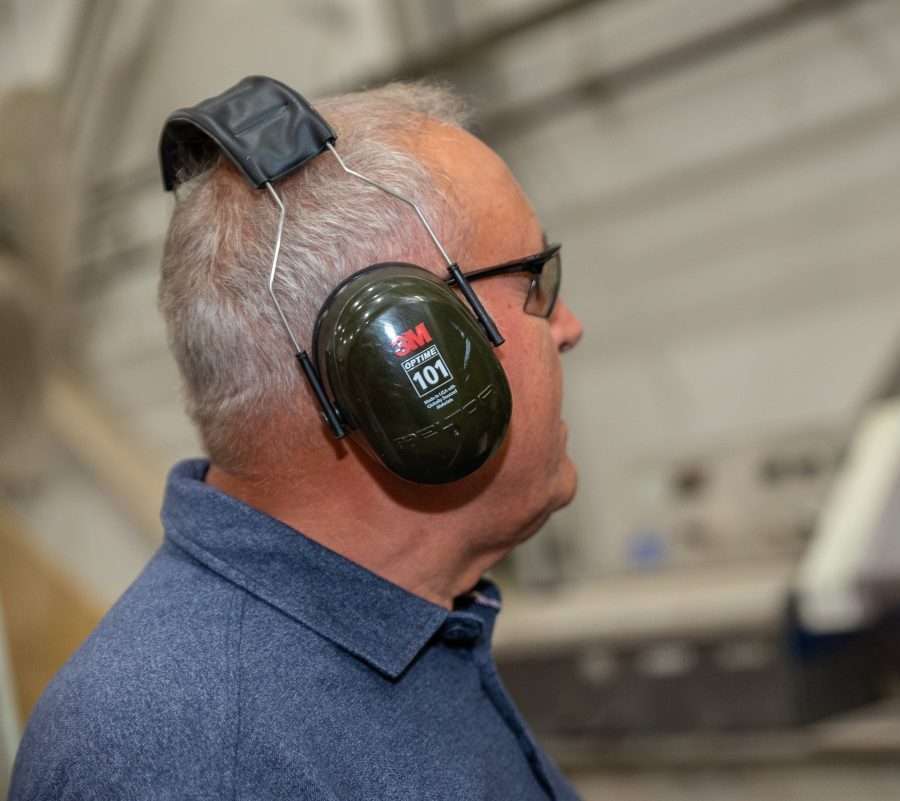
O. Reg. 381 requires employers to ensure worker noise exposure does not exceed 85 dBA Lex,8 and to implement a documented measures. A hearing conservation program is often regarded as a way to comply.
Inspectors focus on whether exposure is understood, measured where needed, and controlled using appropriate methods.
How to implement OEL compliance in practice
Start by identifying tasks that generate exposure. Focus on real work activities, including maintenance, cleaning, and non-routine operations.
Determine which limits apply using Ontario’s exposure limit table and identify whether values are TWA, STEL, or ceiling limits.
Assess exposure based on risk. Use qualitative assessments where appropriate, but move to air sampling or noise monitoring where exposure may be significant or uncertain.
Apply controls based on actual risk. This often includes ventilation, substitution, enclosure, process changes, and improved housekeeping before PPE.
Ensure respiratory protection and hearing conservation programs are documented and properly implemented.
Reassess when conditions change. Exposure can shift due to production changes, new materials, or equipment wear.
When employers should act
Employers should act before issues escalate into complaints or enforcement.
Warning signs include:
- visible dust or fumes
- increased respirator use
- worker complaints of odours or irritation
- difficulty communicating due to noise
- process or material changes
These signals indicate that exposure may not be adequately controlled and that an occupational hygiene assessment is needed.
Need help implementing occupational exposure limit compliance?
Explore Our Services
Occupational Hygiene Assessment
Identify airborne and noise exposure risks and determine whether workers exceed Ontario occupational exposure limits.
OEL Compliance Program Development
Develop and implement exposure control programs aligned with Regulation 833 and Ontario enforcement expectations.
Employer Training System
Train supervisors and workers to recognize exposure risks, apply controls, and maintain ongoing health and safety compliance.