

Ontario’s 2025–2026 Health and Safety Compliance Plans: Occupational Hygiene
Schedule an occupational hygiene consultation.
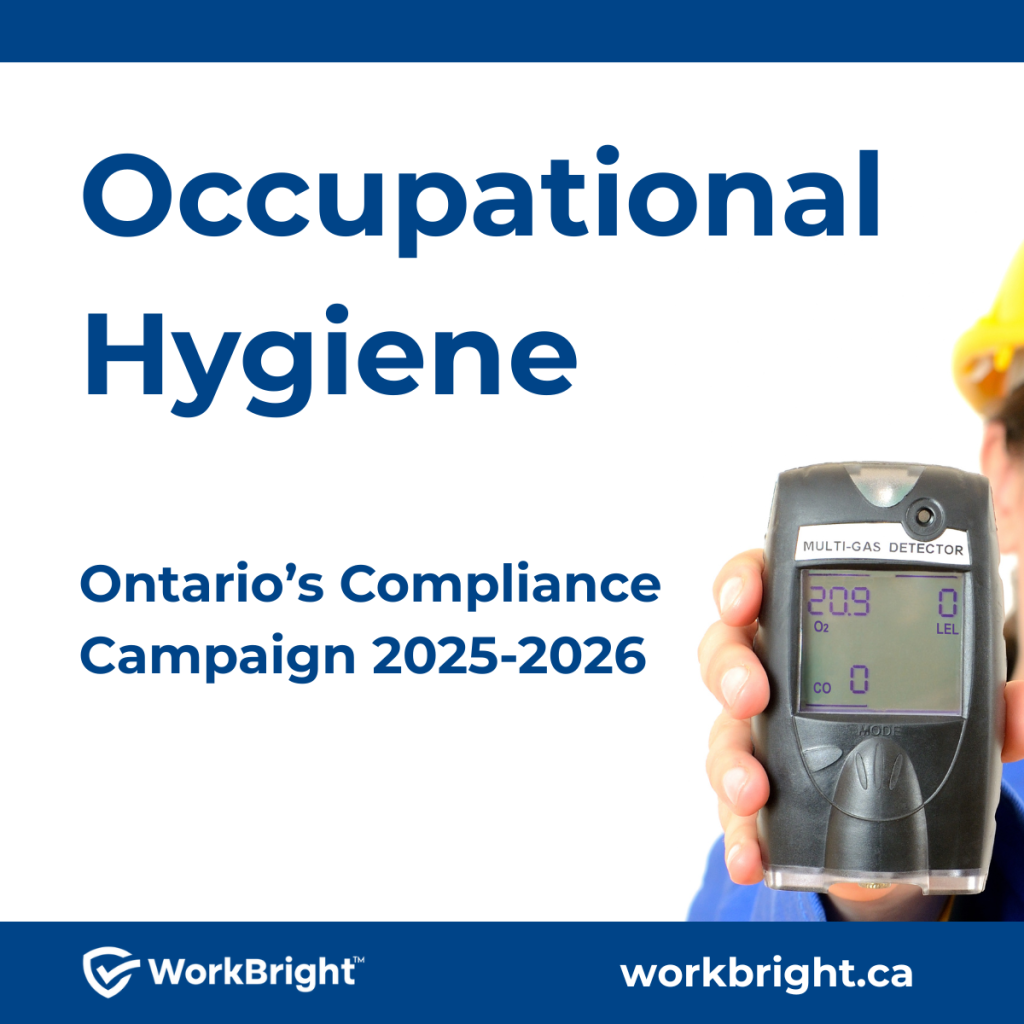
Ontario’s Ministry of Labour, Immigration and Skills Development (MLITSD) has launched its 2025–2026 occupational hygiene compliance campaign.
This campaign will apply to all sectors including construction, manufacturing, mining, health care and more. It will focus on two key areas:
- Enforcing Regulation 833: Control of Exposure to Biological or Chemical Agents, and
- Ensuring compliance with the Workplace Hazardous Materials Information System (WHMIS) under Regulation 860.
Employers must act now to protect workers and ensure occupational hygiene compliance.

Schedule an occupational hygiene consultation.
Inspections will include proactive site visits by MLITSD occupational hygienists to evaluate how well employers are identifying, assessing, and controlling worker exposures to chemical agents, and whether WHMIS training and labelling meet updated standards.
Here are three practical steps workplaces can take to prepare and protect their workers while ensuring compliance in anticipation of the Government of Ontario’s occupational hygiene compliance campaign in 2025-2026.
1. Conduct Regular Risk Assessments That Include Occupational Hygiene Compliance Assessments
Hazards such as fumes, dust, vapours, and gases are often invisible and easily overlooked. But when it comes to health and safety, airborne chemical agents can be just as dangerous—if not more so—than physical safety hazards.
Chemicals can include hazards such as silica dust, welding fumes, volatile organic compounds (VOCs), isocyanates, and more.
Read more about Occupational Exposure Limits in Ontario.
What Workplaces Can Do
The first step every workplace should take is to understand if chemicals are a serious risk to workers. Workplaces can take a few steps to know if chemicals are a problem.
Perform an occupational hygiene assessment
Experts, such as a Registered Occupational Hygienist or Certified Industrial Hygienist can help workplaces determine with confidence if certain chemicals pose a serious risk to workers. They have the training, experience and skills to review details such as the work environment, materials and equipment used, the process, information about the work tasks. Air sampling may be required.
Review Safety Data Sheets (SDS)
Products such as flammable liquids, corrosive materials, or products that can cause harmful health effects like cancer, central nervous system depression, sensitization, and more. WHMIS Safety Data Sheets (SDSs) can unlock a wealth of information to help workplaces understand what the hazards are, precautions to take and more.
Consult workers and supervisors
Workers and supervisors can provide valuable information about how products are used or how processes work. It’s important to consult them.
Reference external resources
Many organizations such as the National Institute for Occupational Safety and Health (NIOSH), Canadian Centre for Occupational Health and Safety (CCOHS), and Occupational Cancer Research Centre (OCRC) are some examples of reliable sources of information about health hazards in the workplaces. This information can help workplaces better understand if chemicals at work may be a risk to workers.

WorkBright helped our health and safety team with an occupational hygiene assessment. Mike communicated effectively and prepared our team for the day. His findings were thorough and clear to understand which gave us and our employees confidence. We truly value his expertise.
Jenn Eden, Health & Safety Manager, Powell Contracting
Schedule a free 30-minute consultation with a Registered Occupational Hygienist.
2. Maintain Clear and Accurate Documentation
Good documentation is important. It can improve communication by ensuring all workplace parties understand their duties when it comes to chemical hazards.
What Workplaces Can Do
Make sure to retain documentation related to:
-
Workplace inspections that identify new chemical agents or WHMIS issues such as missing WHMIS labels, hazardous products that are not stored properly, or other concerns
-
Up-to-date Safety Data Sheets
-
Worker and supervisor training records, especially for WHMIS or chemical-handling tasks
-
Standard Operating Procedures (SOPs) that detail how the work is to be performed in a healthy and safe manner
-
Equipment maintenance logs
-
Reports from occupational hygiene assessments or air sampling
Documentation that is kept current not only helps with compliance it also strengthens your internal responsibility system by making roles, risks, and responsibilities clear.

Need expert occupational hygiene advice?
3. Train and Engage Workers and Supervisors Continuously
Inspectors won’t just be looking for proof that WHMIS training was completed, they will also be evaluating whether workers know about the hazardous products and if they are following safe handling procedures.
What Workplaces Can Do
Deliver hazard-specific training.
There are many specific details about actual hazardous products used in the workplace that workers need to know. These are generally not covered in online training.
Use eLearning, toolbox talks, and posters as reminders
Studies show that much of what adults learn is soon lost. It’s called the forgetting curve. Spaced learning and review is essential for retaining information. Frequent reminders after training is a great way to help workers remember important health and safety information.
Convenience at your fingertips. Provide customized WHMIS eLearning reminders to your workers.

Final Thoughts
The Ministry’s occupational hygiene compliance campaign has begun and employers shouldn’t wait to be visited by government inspectors. Protecting workers from chemical exposure keeps them healthy, shows the company’s commitment to health and safety, and improves compliance.
Need Help with Occupational Hygiene Compliance?
WorkBright supports workplaces with comprehensive occupational hygiene consulting, including for enforcement orders by inspectors with the Ministry of Labour, Immigration, Training and Skills Development.
Speak with a Registered Occupational Hygienist
Explore our Occupational Hygiene Assessment Services